The Space Shuttle is a retired, partially reusable low Earth orbital spacecraft system operated from 1981 to 2011 by the U.S. National Aeronautics and Space Administration (NASA) as part of the Space Shuttle program. Its official program name was Space Transportation System (STS), taken from a 1969 plan for a system of reusable spacecraft where it was the only item funded for development.[7]
The first (STS-1) of four orbital test flights occurred in 1981, leading to operational flights (STS-5) beginning in 1982. Five complete Space Shuttle orbiter vehicles were built and flown on a total of 135 missions from 1981 to 2011. They launched from the Kennedy Space Center (KSC) in Florida. Operational missions launched numerous satellites, interplanetary probes, and the Hubble Space Telescope (HST), conducted science experiments in orbit, participated in the Shuttle-Mir program with Russia, and participated in the construction and servicing of the International Space Station (ISS). The Space Shuttle fleet’s total mission time was 1,323 days.[8]
Space Shuttle components include the Orbiter Vehicle (OV) with three clustered Rocketdyne RS-25 main engines, a pair of recoverable solid rocket boosters (SRBs), and the expendable external tank (ET) containing liquid hydrogen and liquid oxygen. The Space Shuttle was launched vertically, like a conventional rocket, with the two SRBs operating in parallel with the orbiter’s three main engines, which were fueled from the ET. The SRBs were jettisoned before the vehicle reached orbit, while the main engines continued to operate, and the ET was jettisoned after main engine cutoff and just before orbit insertion, which used the orbiter’s two Orbital Maneuvering System (OMS) engines. At the conclusion of the mission, the orbiter fired its OMS to deorbit and reenter the atmosphere. The orbiter was protected during reentry by its thermal protection system tiles, and it glided as a spaceplane to a runway landing, usually to the Shuttle Landing Facility at KSC, Florida, or to Rogers Dry Lake in Edwards Air Force Base, California. If the landing occurred at Edwards, the orbiter was flown back to the KSC atop the Shuttle Carrier Aircraft (SCA), a specially modified Boeing 747 designed to carry the shuttle above it.
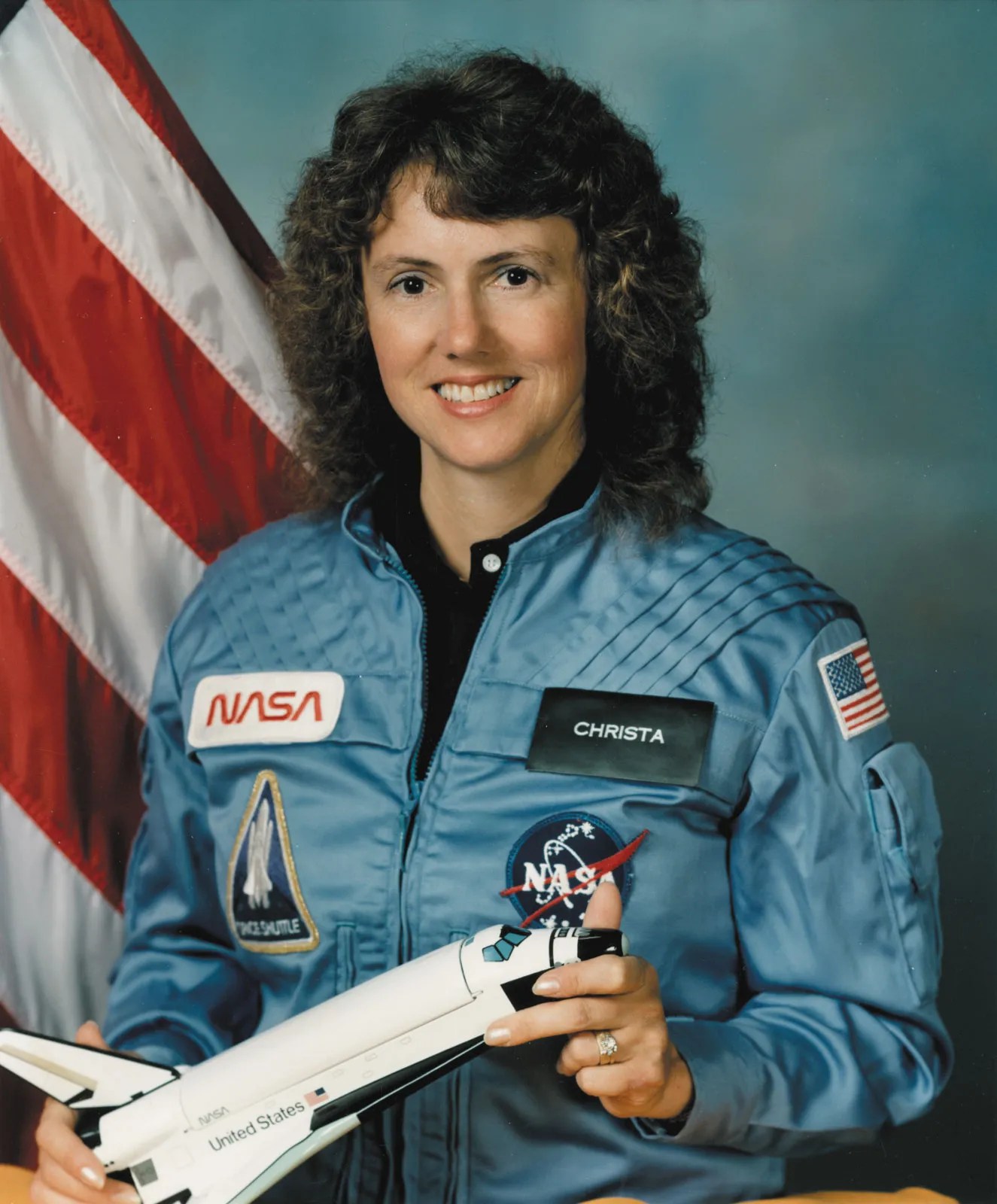
Sharon Christa McAuliffe (née Corrigan; September 2, 1948 – January 28, 1986) was an American teacher and astronaut from Concord, New Hampshire who was killed on the Space Shuttle Challenger on mission STS-51-L, where she was serving as a payload specialist.[2]
In 1984, President Ronald Reagan announced the Teacher in Space Project, and McAuliffe learned about NASA’s efforts to find their first civilian, an educator, to fly into space.[20] NASA wanted to find an “ordinary person,” a gifted teacher who could communicate with students while in orbit.[6][15] McAuliffe became one of more than 11,000 applicants.[20]
On January 28, 1986, McAuliffe boarded Challenger with the other six crew members of STS-51-L. Only 73 seconds into its flight at an altitude of 48,000 ft (14.630 km), the shuttle broke apart, resulting in the deaths of all seven crew members.[6][34]
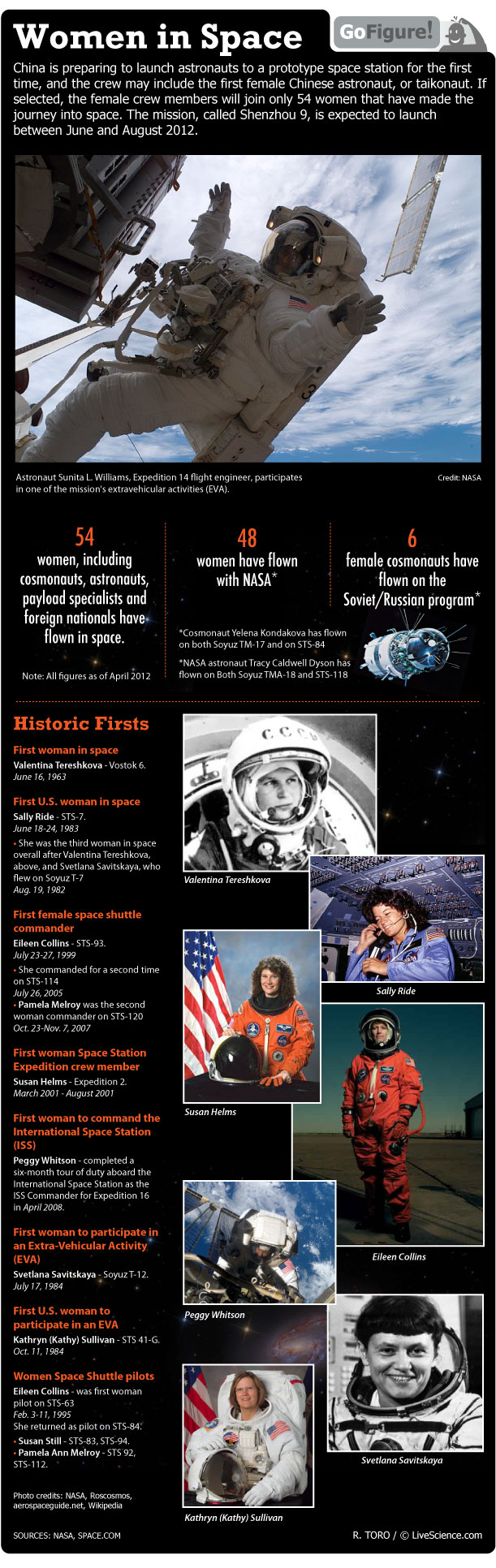
Women in Space infographic.
 Aerospace Design Experience
Leave a comment