Amelia Earhart
Amelia Mary Earhart was the daughter of
Samuel “Edwin” Stanton Earhart and Amelia
“Amy”Otis Earhart. Amelia was born in Atchison,
Kansas, on July 24, 1897. Amelia’s upbringing
was unconventional. Her mother, Amy, did not
believe in molding her children, Amelia and her
sister Muriel (nicknamed Pidge), into “nice little
girls.”
As a child, Amelia spent long hours playing
with Pidge, climbing trees, hunting rats with a
rifle and “belly-slamming” her sled downhill. In
1904, Amelia and her uncle pieced together a
homemade ramp modeled after a roller coaster.
They attached the ramp to the family’s tool shed
and Amelia rode the ramp in a wooden box. Though the wooden box was shattered and Amelia’s lip bruised, she
exclaimed, “Oh, Pidge, it’s just like flying’
By the time Amelia was in high school, her family had moved to Chicago. There, Amelia searched for a school that had
a strong science program. She discovered one in Hyde Park High School. After graduating from Hyde Park, Amelia
continued to research her future career, keeping a scrapbook of newspaper clippings about successful women in
male-dominated fields including film production, law, advertising, management and engineering.
In 1920, Amelia and her father visited an airfield where Amelia took her first ride in an airplane. That ride would
change her life forever. She said, “By the time I had got two or three hundred feet off the ground I knew I had to fly.”
Six months after her first flight, Amelia purchased a used bright yellow airplane, which she nicknamed“The Canary.”
On October 22, 1922, Amelia flew her plane to an altitude of 14,000 feet, setting a world record for female pilots.
A year after Charles Lindbergh’s solo flight across the Atlantic in 1927, Amelia got a phone call from Captain Hilton H.
Railey, who asked, “Would you like to fly the Atlantic?” Amelia enthusiastically took this opportunity, though she flew
only as a passenger, with the added duty of keeping up the flight log. After the flight, Amelia said, “I was just baggage,
like a sack of potatoes.” She added, “…maybe someday I’ll try it alone.”
Because of her resemblance to Lindbergh, whom the press nicknamed“Lucky Lindy,”some reporters began referring
to Amelia as “Lady Lindy” or the “Queen of the Air.”
Although Amelia gained some fame from her transatlantic flight, she wanted to set a record of her own. So, Amelia set
off on her first extended solo flight, in August of 1928, becoming the first woman to fly solo across North America and
back. In 1931, she set a world altitude record of 18,415 feet.
At the age of 34, on the morning of May 20, 1932, Earhart set off from Harbour Grace, Newfoundland with the latest
copy of a local newspaper to confirm the date of her flight. She intended to fly to Paris in her single engine plane
just like Charles Lindbergh, but after a flight lasting 14 hours, 56 minutes during which she battled strong winds, icy
conditions and mechanical problems, Amelia landed in a pasture in Northern Ireland. When a farm hand asked, “Have
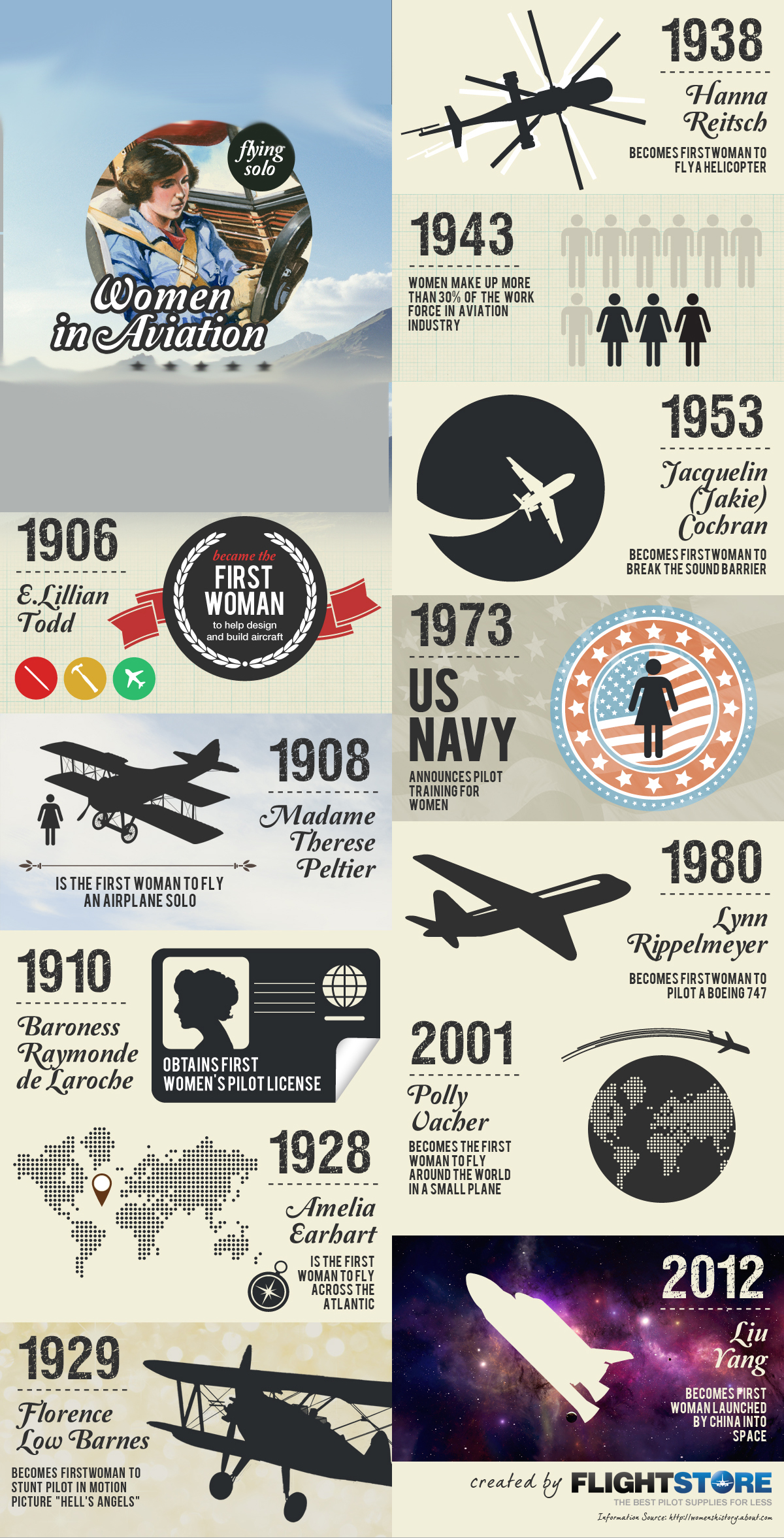
you flown far?” Amelia replied, “From America.” Amelia Earhart had become the first woman to fly solo non-stop across
the Atlantic.
In 1935, Amelia became the first person to fly solo from Hawaii to California. In the same year, flying her beloved Vega
airplane, which she called “Old Bessie,” Amelia soloed from Los Angeles to Mexico City.
Between 1930 and 1935, Amelia Earhart set seven records in aviation for speed and distance, but by 1935, Amelia
began to think about a new adventure, a flight she most wanted to attempt – a circumnavigation of the globe at the
equator.
In order to prepare for her flight, Amelia contacted Hollywood “stunt” pilot Paul Mantz to help her improve her long
distance flying. As well, she joined the faculty of Purdue University in 1935 as a visiting professor in order to counsel
women on aviation careers, serve as technical advisor to the Department of Aeronautics and garner support for her
around-the-world flight.
Though not the first pilot to circle the globe, Amelia would choose the longest course at 29,000 miles, following a
difficult equatorial path. With funding from Purdue, a Lockheed Electra 10E was built to her specifications to include
among other things, an especially large fuel tank.
Soon, Amelia contacted Fred Noonan to be her navigator since he had plenty of experience in marine as well as
airplane navigation.
On March 17, 1937, Amelia and her crew flew the first leg of the trip from Oakland, California to Honolulu, Hawaii. In
addition to Amelia and Fred Noonan, Harry Manning and Paul Mantz were on board; however, the flight could not
continue due to technical failure.
While the Electra was being repaired Amelia and her husband, George P. Putnam, a publisher, got additional funds
for a second try. This time Amelia would fly from Oakland, California to Miami, Florida. Once she got there would she
publicly announce her plans to circumnavigate the globe. The flight’s opposite direction, from west to east instead
of east to west, was due in part to changes in wind and weather patterns. Fred Noonan would be Amelia’s only
crewmember on this flight. The two departed Miami on June 1 and after many stops in South America, Africa, India
and Southeast Asia, they arrived at Lae, Papua New Guinea on June 29, 1937. At this stage in the journey, Amelia and
Fred Noonan had about 22,000 miles behind them. The remaining 7,000 miles would be over the Pacific Ocean.
On July 2, 1937, Amelia and Fred Noonan took off from Lae, Papua New Guinea in a heavily loaded Electra. They were
heading for Howland Island, a flat sliver of land 2,556 miles away. Amelia’s last known position was taken about 800
miles into her flight by the United States Coast Guard ship Itasca, which had been assigned to communicate with
Amelia’s airplane and guide them to the island once they got overhead.
Through a series of misunderstandings or errors, Amelia’s final approach to Howland Island using radio failed and
beginning one hour after Amelia’s last recorded message, the Itasca began its search north and west of Howland
Island. The United States Navy soon joined in the search, and over a period of about three days all of the area around
Howland Island was investigated, but no sign of the flyer was ever found. Airplanes also flew over the area to the
north, west and southwest of Howland Island, based on a possibility that the Electra had crashed in the ocean,
perhaps leaving the aviators in an emergency raft, but the search yielded nothing.
On July 19, 1937, the official search for Amelia Earhart and Fred Noonan was called off, and no physical evidence of
Earhart, Noonan or the Electra 10E has ever been found. Amelia Earhart was declared legally dead on January 5, 1939.
Although Ms. Earhart was not the only female aviator of her time, she was the most famous. She had her own
clothing and luggage line, and endorsed multiple products.
Other prominent female aviators included Willa Brown, who was the first African American to earn a commercial flight
license in the United States. In addition, she helped train more than 200 students who eventually became Tuskegee
Airmen. At age 16, Elinor Smith was the youngest pilot to earn a license which was signed by Orville Wright. Another
notable pilot was Jacqueline Cochran, the first woman to exceed Mach 1 the sound barrier.
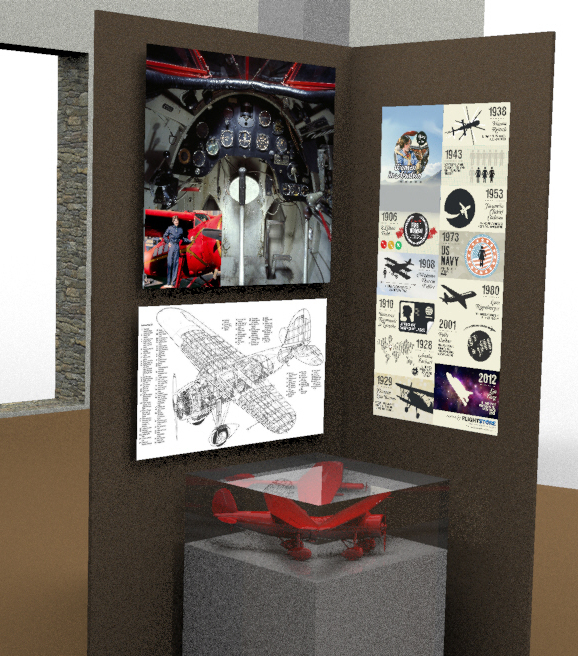
Display.
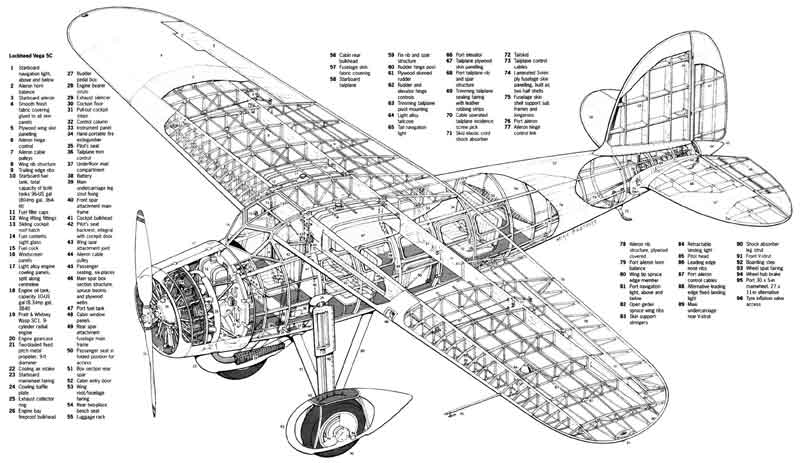
Cutaway Vega.
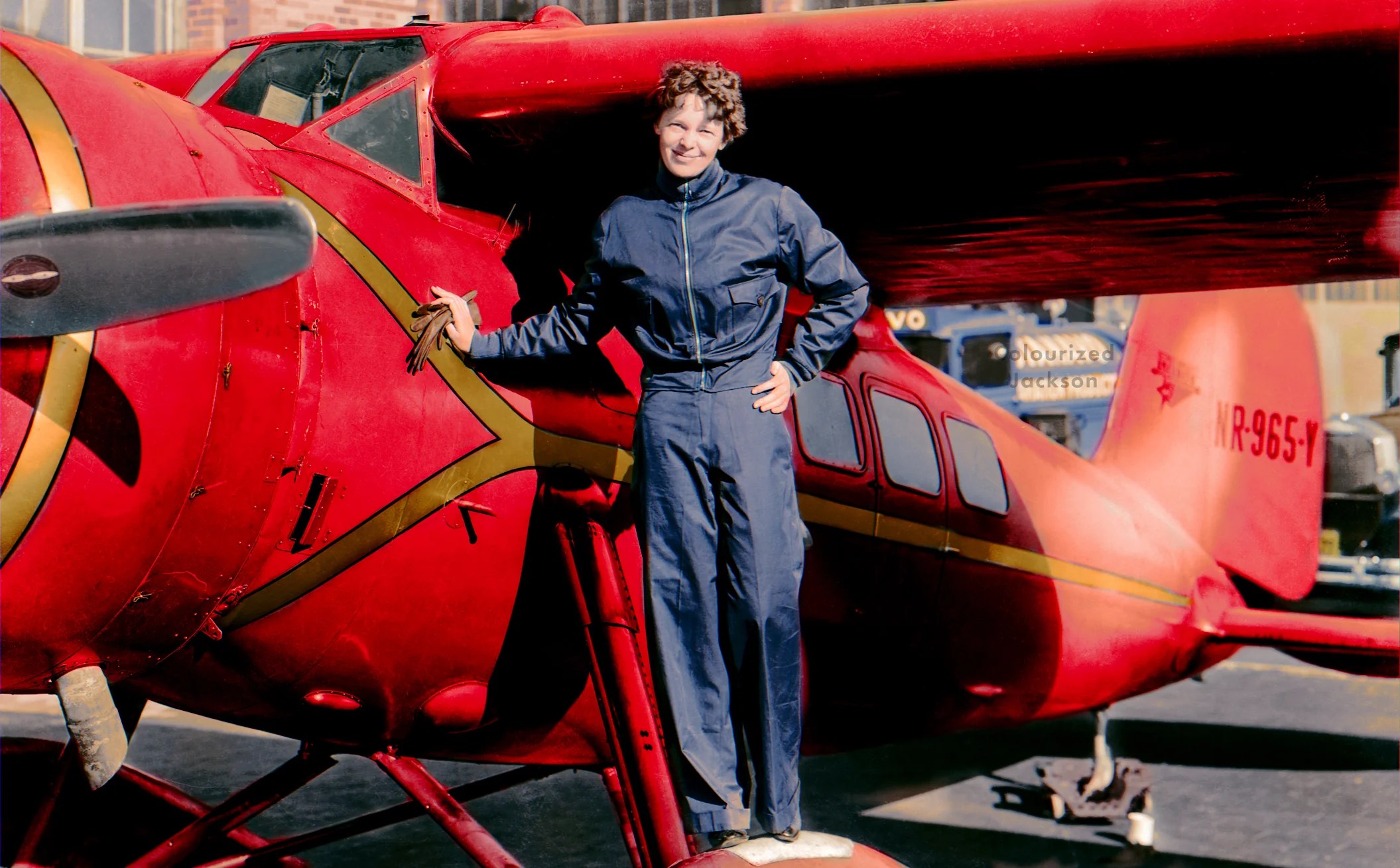
Amelia Earhart
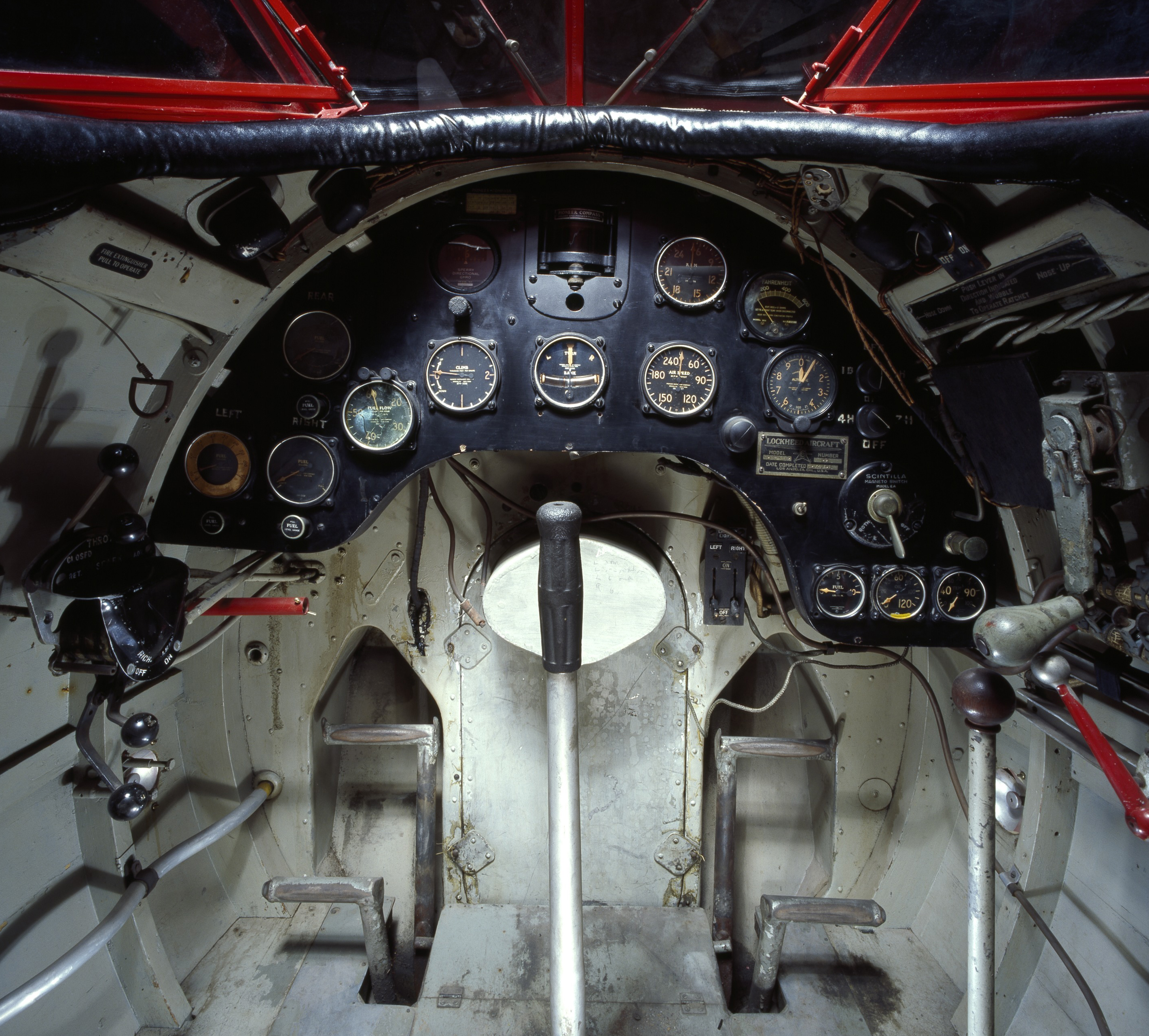
Locheed Vega instrument panel.
Women in Aviation infographic.
 Aerospace Design Experience
Leave a comment