WW II North American Aviation P-51D Mustang
Many people consider the P-51 Mustang the best fighter of World War II. Its combination of speed, range, maneuverability, and firepower gave it great versatility. Its use in all major theaters of the war included long-range high-altitude escort, strafing, and photo reconnaissance.
The P-51 Mustang was originally designed for the Royal Air Force. However, it became a long-range escort fighter for the U.S. armed forces against Nazi Germany. The production process was efficient and quick; about 14,000 were built during WWII. It was a powerful and fast aircraft with extensive range. The P-51 Mustang was stiff competition for the Luftwaffe.
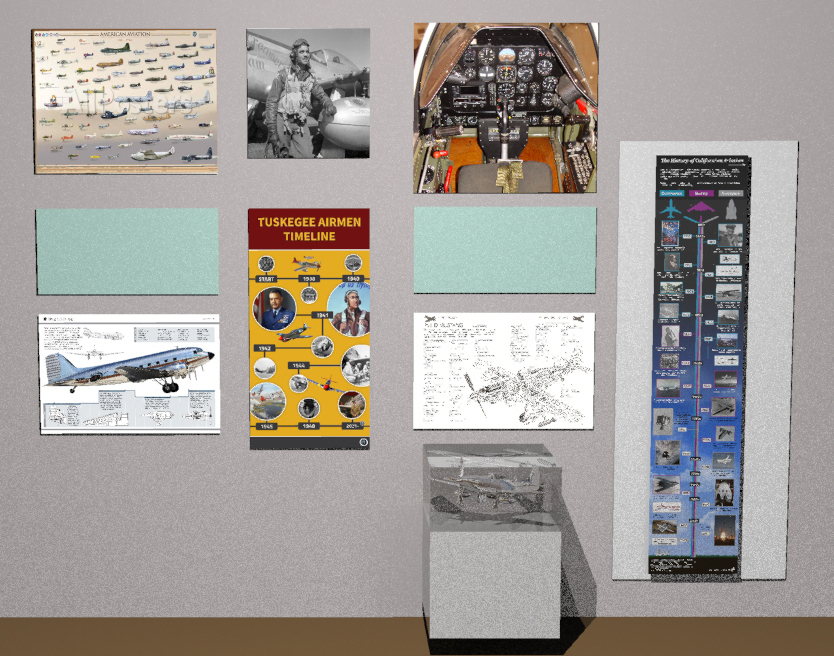
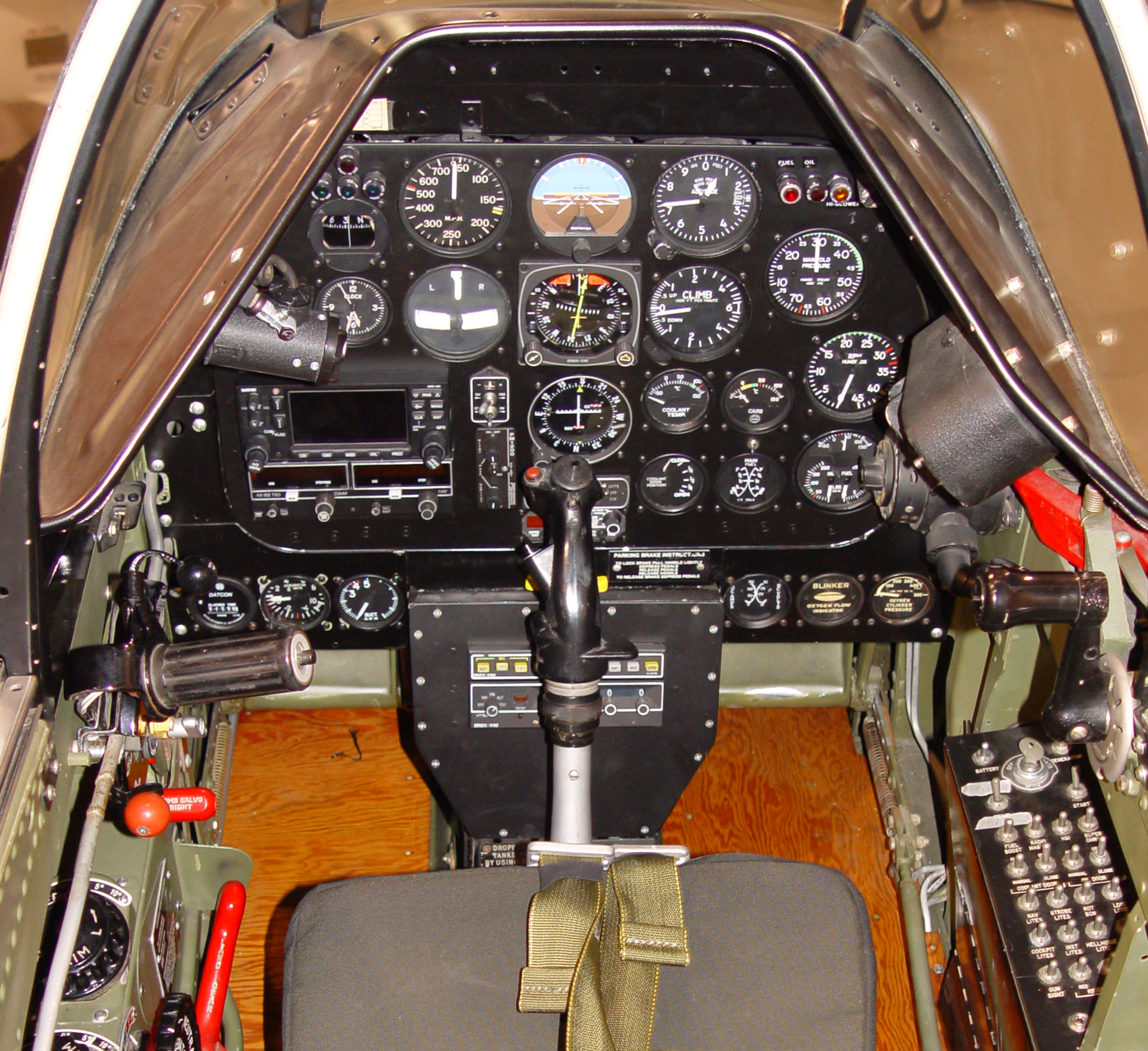
The model that will be on display will be a 1/16th scale 3D printed model. Also on display will be a full scale replica of the instrument panel, a wing, skin sample, cutaway drawings and the tools used to construct the vehicle.
P-51D Imstrument panel.
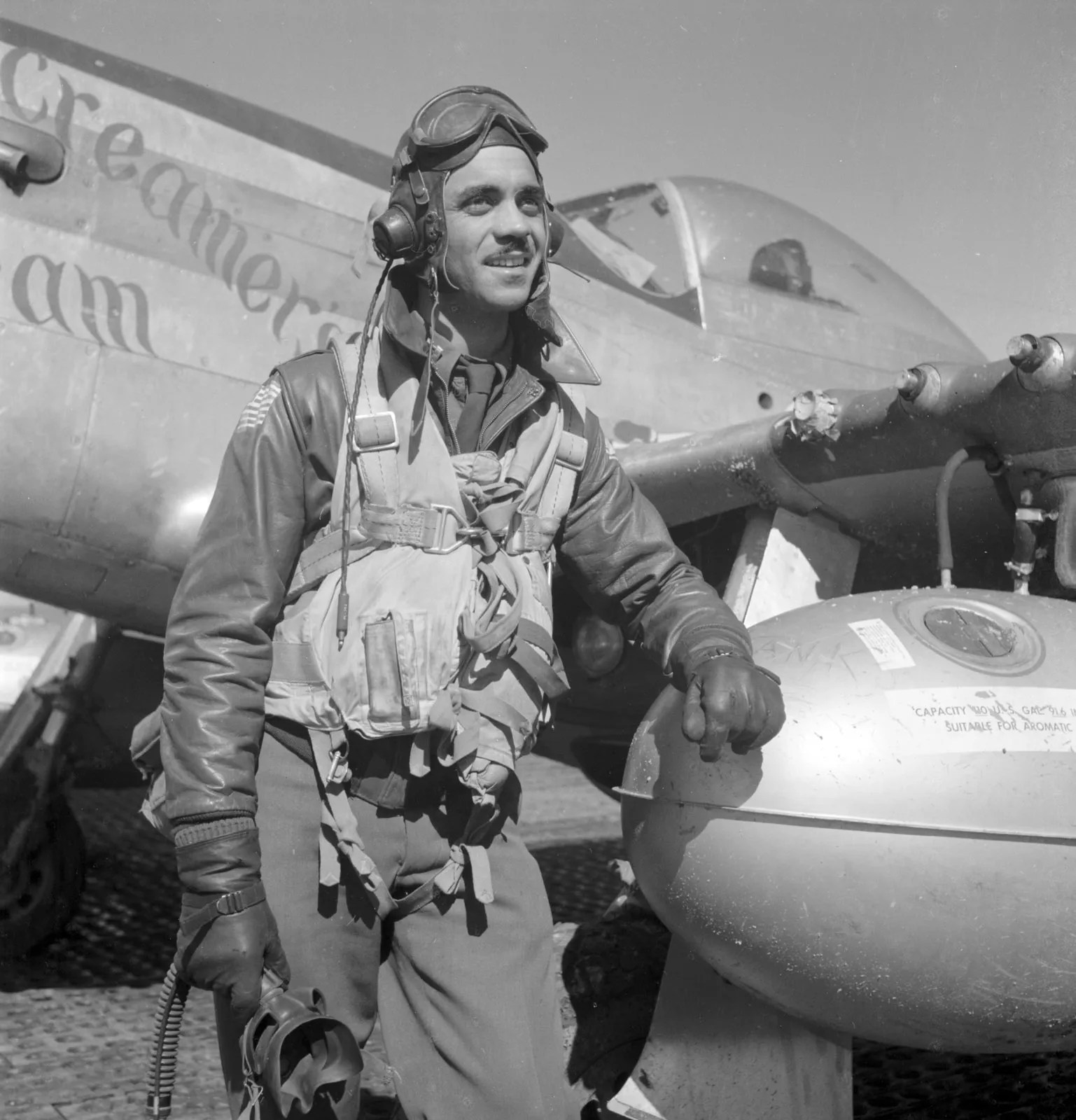
The Tuskegee Airmen and Ben Davis.
Tuskegee Airmen
Although formally they were known as the 332nd Fighter Group of the U.S. Army Air Corps, the Tuskegee Airmen
Corps, was the popular name for a group of African American pilots who fought with distinction in World War II. The
pilots were nicknamed the Red-tailed Devils because airplane tails were painted red.
The Tuskegee Airmen were the first African American military pilots in the history of the United States armed forces.
During World War II, African Americans in many states were still subject to Jim Crow laws, which meant they were
required to have separate training schools and facilities and were kept separate from white members of the military.
As such, the Tuskegee Airmen experienced racial discrimination, both within and outside of the army. Despite these
challenges, the Tuskegee Airmen flew successful missions as bomber escorts throughout Europe.
Before the Tuskegee Airmen, no American military pilots had been African American, but in 1941 when the United
States Congress forced the Army Air Corps to form an all-black combat unit, the War Department disagreed. In an
effort to eliminate the unit before it could form, the War Department set up a system to accept only those with an
uncommonly high level of flight experience or with a higher education, setting up standards they thought would
be difficult for African American pilots to achieve. The policy failed dramatically when the Air Corps received an
abundance of applications from African American men who qualified, many of whom already participated in the
Civilian Pilot Training Program through the historically black Tuskegee Institute.
Strict racial segregation in the U.S. Army required the development of a separate group of African American flight
surgeons to support the Tuskegee Airmen. Before the development of this unit, no U.S. Army flight surgeons were
Black. The training of African American men as medical examiners was conducted through separate classes until 1943,
when two Black doctors were admitted to the U.S. Army School of Aviation Medicine at Randolph Field, Texas. This was
one of the earliest racially integrated
courses in the U.S. Army. Seventeen
flight surgeons served with the
Tuskegee Airmen from 1941 through
1949. The chief flight surgeon of the
Tuskegee Airmen was Dr. Vance H.
Marchbanks, a boyhood friend of
Benjamin O. Davis, Jr., who would
become the commander of the fighter
group.
It was not easy overcoming racism
in the military, but by the end of the
war, the Tuskegee Airmen shot down
112 German aircraft, sunk a German-
operated Italian destroyer, and
destroyed numerous enemy trucks
and trains. Their squadrons completed
more than 15,000 attacks during 1,500
missions. The Tuskegee Airmen were
awarded a Distinguished Unit Citation
(DUC) for the mission to escort B-17s on their way to bombing the Daimler-Benz tank factory in Berlin, Germany.
During this flight, pilots destroyed three enemy jets.
By the end of the war, the Tuskegee Airmen were awarded several Silver Stars, 150 Distinguished Flying Crosses, 8
Purple Hearts, 14 Bronze Stars, 744 Air Medals and earned the distinction of never losing any bombers to enemy
fighter.
Ben Davis
Tuskegee Airmen infographic.

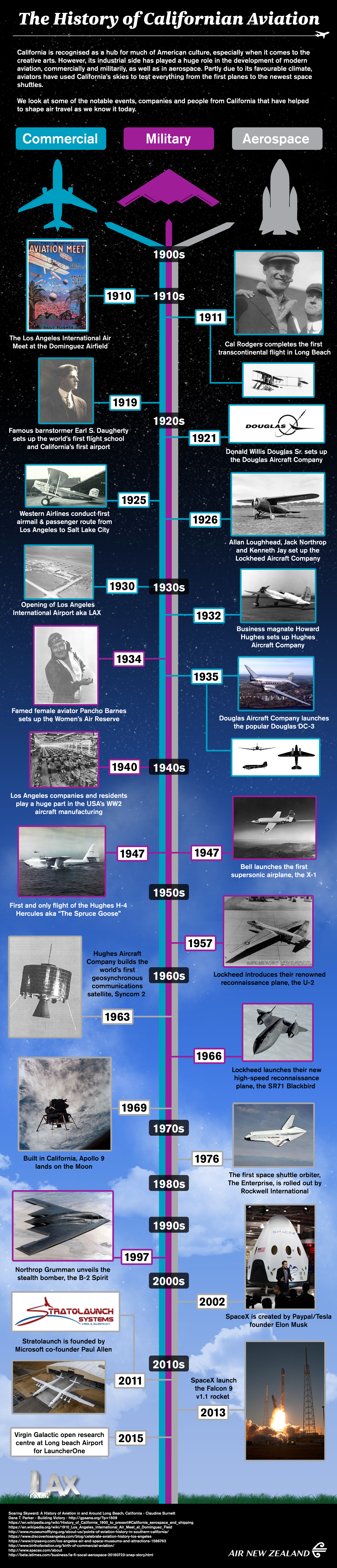
TheDouglas DC-3 and California Aircraft Industry.
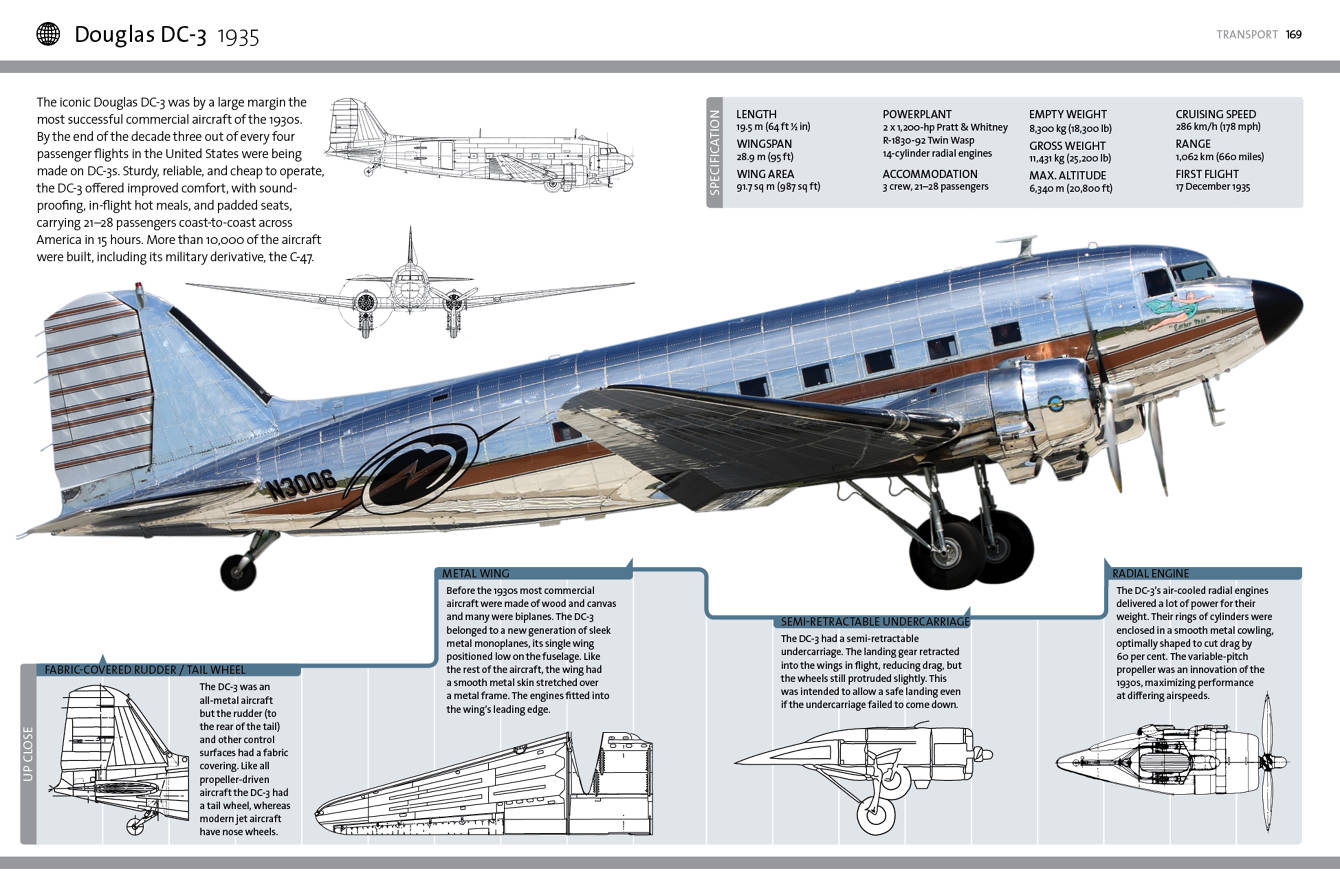
Airplane: Douglas DC-3
Date: First flown in 1935
SCIENCE AND TECHNOLOGY
The DC-3 was built of aluminum, making it stronger and
more durable than earlier aircraft, which used modified
fabrics like painted canvas. The DC-3 also had a larger
fuselage (body) and wings, and it could carry more weight.
The DC-3 transported as many as 21 passengers at a time
at speeds of up to 212 mph. The design of the DC-3 was
streamlined with its bullet-shaped fuselage, two powerful
engines enclosed by cowlings (hoods), and its retractable landing gear.
SOCIAL IMPACT
The DC-3 was the first modern airliner. It was the fastest commercial form of transportation in its day, and the first
airplane to make a profit carrying passengers. The DC-3 made air travel popular and affordable. Its sleek, streamlined
shape influenced the design of everything from automobiles to toasters. Military airplane technology also had
advanced by this time, resulting in the remarkable airpower that was demonstrated in World War II. The DC-3 used
by Americans to move troops and supplies during the war was nicknamed the Gooney Bird because of its awkward
appearance
California Aerospace.
 Aerospace Design Experience
Leave a comment