1927 Spirit of Saint Louis
The Spirit of St. Louis (formally the Ryan NYP, registration: N-X-211) is the custom-built, single engine, single-seat, high wing monoplane that was flown by Charles Lindbergh on May 20–21, 1927, on the first solo nonstop transatlantic flight from Long Island, New York, to Paris, France, for which Lindbergh won the $25,000 Orteig Prize.[2]
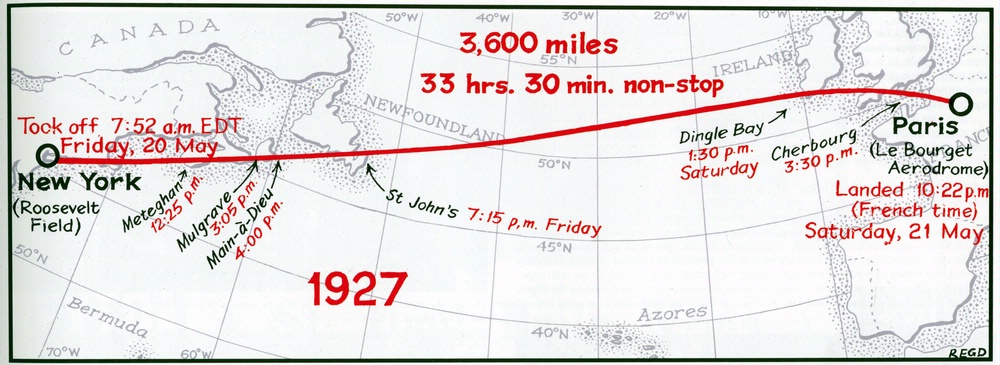
Lindbergh took off in the Spirit from Roosevelt Airfield, Garden City, New York, and landed 33 hours, 30 minutes later at Aéroport Le Bourget in Paris, France, a distance of approximately 3,600 miles (5,800 km).[3] One of the best-known aircraft in the world, the Spirit was built by Ryan Airlines in San Diego, California, owned and operated at the time by Benjamin Franklin Mahoney, who had purchased it from its founder, T. Claude Ryan, in 1926. The Spirit is on permanent display in the main entryway’s Milestones of Flight gallery at the Smithsonian Institution‘s National Air and Space Museum in Washington, D.C.
Officially known as the “Ryan NYP” (for New York to Paris), the single-engine monoplane was designed by Donald A. Hall of Ryan Airlines and named the “Spirit of St. Louis” in honor of Lindbergh’s supporters from the St. Louis Raquette Club in his then hometown of St. Louis, Missouri. To save design time, the NYP was loosely based on the company’s 1926 Ryan M-2 mailplane, the main difference being the NYP’s 4,000-mile range. As a nonstandard design, the government assigned it the registration number N-X-211 (for “experimental”). Hall documented his design in “Engineering Data on the Spirit of St. Louis“, which he prepared for the National Advisory Committee for Aeronautics (NACA) and is included as an appendix to Lindbergh’s 1953 Pulitzer Prize winning book The Spirit of St. Louis.
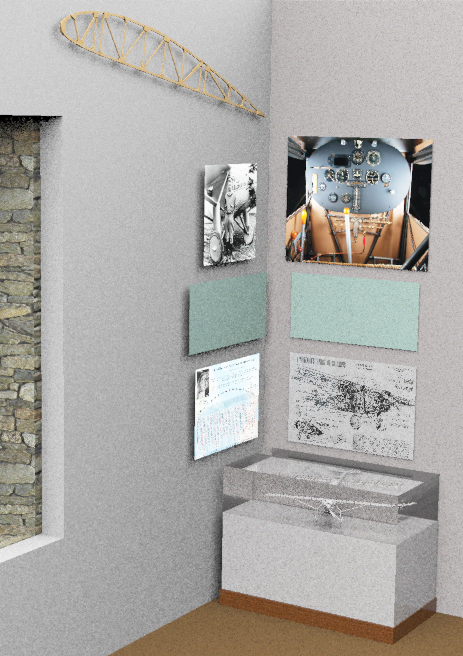
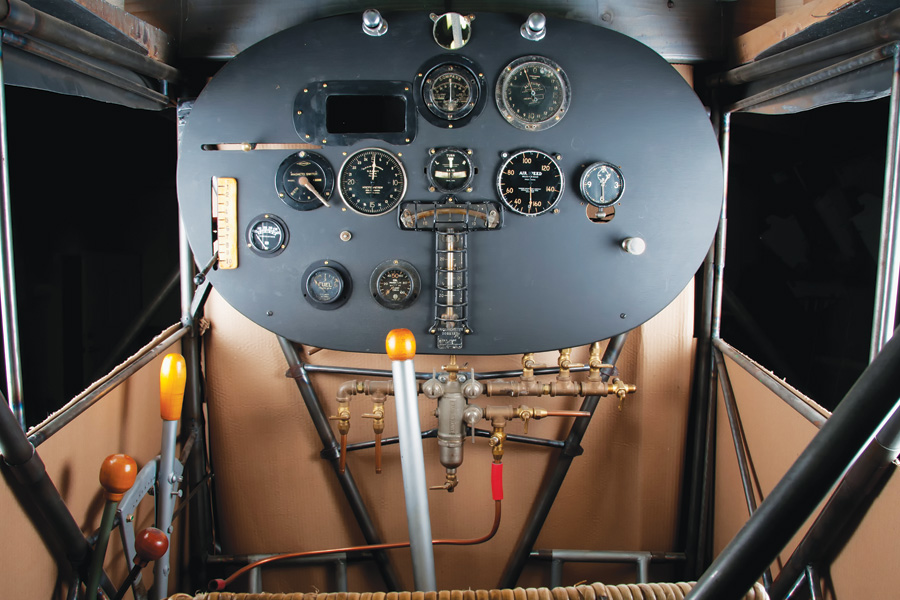
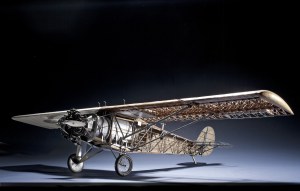
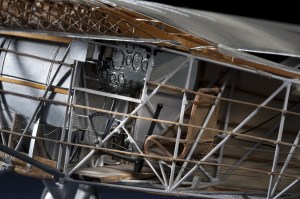
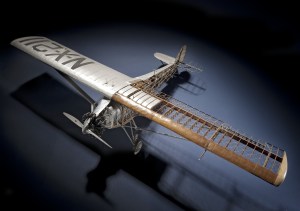
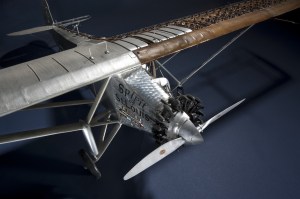
The model pictured is part of the National Air and Space Museum’s collection and is 1/16th scale. Our goal is to have a similar model built. Other items will include a full scale replica of the Spirit’s instrument panel, a wing rib and skin section and a 1/4 scale model of the engine.
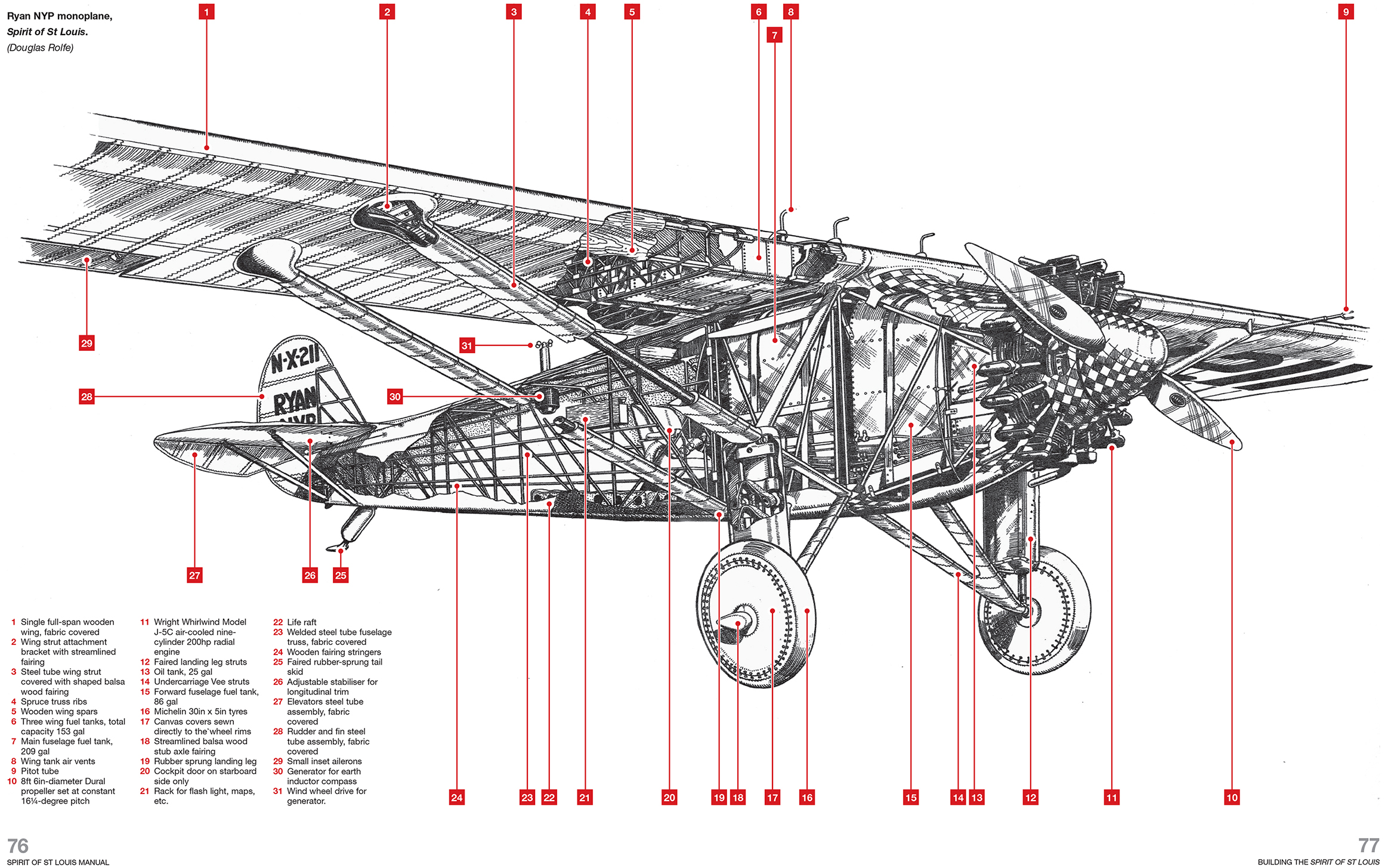
Cutaway image.
Instrument panel, no front window.
 Aerospace Design Experience
Leave a comment